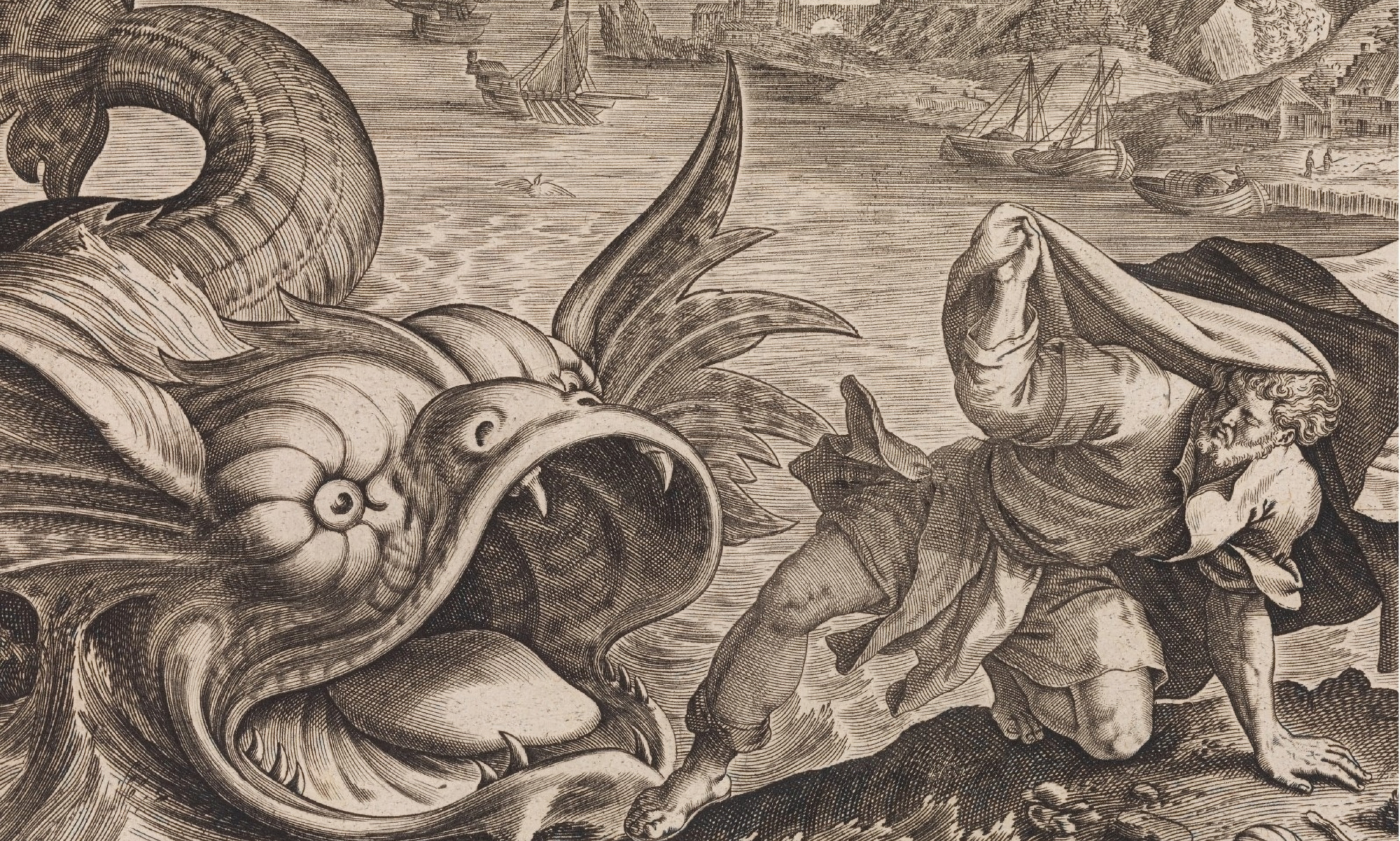
His strange red cattle excited envy Herakles came and
Killed him for his cattleThe dog too
‘Red Meat: Fragments of Stesichoros’, in Anne Carson, Autobiography of Red
‘I wonder sometimes if the teacher is not the real student and beneficiary’ (George Steiner)
His strange red cattle excited envy Herakles came and
Killed him for his cattleThe dog too
‘Red Meat: Fragments of Stesichoros’, in Anne Carson, Autobiography of Red
Another few lines from Carol Ann Duffy, this time from ‘Quickdraw’, again published in Rapture:
You’ve wounded me.
Next time, you speak after the tone. I twirl the phone,
then squeeze the trigger of my tongue, wide off the mark.
You choose your spot, then blast methrough the heart.
These lines express so well how we sometimes wound each other, indeed, how we snipe at each other, in what we say.
How does it happen that our lives can drift
far from our selves, while we stay trapped in time,
queuing for death? It seems nothing will shift
the pattern of our days, alter the rhyme
we make with loss to assonance with bliss.
Then love comes, like a sudden flight of birds
from earth to heaven after rain. …
From Carol Ann Duffy, ‘Rapture’, published in Rapture, a collection of poems that are all part of one book-length love poem. I picked this up in town today, having previously read Duffy’s The Other Country. So far, so enjoyable …

 nne Carson. Red Doc>. The sequel to Autobiography of Red. It doesn’t often happen that I preorder books that have not yet been published. This one I ordered as soon as I knew it was coming out. Autobiography of Red, which I must reread soon, had been a reading experience like no other, and so I had been looking forward to Red Doc>. I half expected to be disappointed though, for how could anything measure up to Autobiography?
So has Red Doc> left me disappointed? No, I’m glad to say that it hasn’t. Is it as good as Autobiography of Red? Perhaps not quite, although it doesn’t fall far short for me. It is a very good book and, like Autobiography, is one of Carson’s most accessible works.
As is so often the case with her books, the layout is once again distinctive.


Being a sequel, Red Doc> picks up the story of Geryon and Herakles years later, but the two protagonists have now acquired new names, Geryon being called G, while Herakles is known as Sad. As for the plot, well, you will have to read the book for yourselves, as I am not going to give anything away.
Readers of Carson’s work won’t be surprised to hear that there are some very poignant moments. For instance, when G meets his old lover, we read:
LOVE’S LONG LOST
shock the boy the man he
knows him. Knew. The
lion head the sloping run a
lavishness in him made you
want to throw your soul
through every door.
I adore Carson’s turn of phrase, which so often is utterly unique and unexpected. This allows her to offer some distinctly new perspectives on life’s most significant moments. In this example, meeting a long lost lover makes ‘you want to throw your soul through every door’. Isn’t that brilliant?
Carson also captures the shock and the breathless response to the surprise encounter so well: ‘the boy the man he knows him’.
Another great moment is G’s conversation with the shrink about his treatment of Sad:
what do you do / talk /
does that help him / one
test for this question /
what test / did he cap
himself yesterday /no / did he cap himself
today / no / so talk helps /
see your point
Red Doc> features many well-taken observations, such as the following one about misnomers, which includes a wonderful description of anciently swaying pines:
Much is misnomer in our
present way of grasping the
world. But pines do
always seem queenly as
they sway so grand and
anciently from the sky to
the ground.
But to me Carson is at her very best when she talks about pain, loss and grief.
G lays his head on the
table it sinks into the table.
To feel anything
deranges you. To be seen
feeling anything strips you
naked.
…
You think what
will they do what new
power will they acquire if
they see me naked like
this. If they see you
feeling.
…
To be seen is the penalty.
Impairment and he lie
down on the floor.
Tears pour in Ida’s
heart but not her eyes …
And the
reason he cannot bear her
dying is not the loss of her
(which is the future) but
that dying puts the two of
them (now) into this
nakedness together that is
unforgivable.
Pain
catches the whole insides
of him and wrings it.
Tears pouring into your heart but not your eyes – what a wonderfully eloquent way of describing pain.
And then there are so many delightful phrases, as when Carson talks about ‘tearstained laughter’, ‘surprised front steps’, a room that ‘looks lonely’, ‘a smile that dazzles the car’ and a voice that is ‘thin enough to see through’, to mention only a few.
Even rather banal moments are evoked in language that delights by its brilliance:
He sits
up suddenly drenched in
ringing. Phone.
This is a book to savour and come back to time and again. I know I will.
 ne of my principles for the content of this blog to offer positive, life-affirming thoughts and perspectives. It is no coincidence, therefore, that there is much on love and hope in these posts. Having said that, I do not intend to pretend that every day is ‘a masterpiece’, to quote from Anne Carson’s latest book Red Doc>. Pain, grief and suffering are sadly a reality none of us can avoid, and hope is not always easy to sustain. Some might even struggle with the notion altogether, a perspective that I can relate to as well. It is expressed with characteristic brilliance in Carson’s Red Doc>:
prometheus
I planted blind hope in their hearts
chorus
whyprometheus
they were breaking
chorus
you fool
This dialogue between Prometheus and an ancient Greek chorus not only showcases Carson’s classicist background; it also features a poignant observation about hope, as do the following lines:
AND YET HOPE turns
out to be let’s face it
mostly delusion a word
derived from Latin ludere
meaning ‘to play a game
with oneself or with others’ …
As I said, there are times when this unfortunately does resonate with me, and yet, as Martin Luther King points out, ‘faith in the dawn arises from the faith that God is good and just’ (Strength to Love, as quoted before).
Apparently, Rumi is the most widely read poet in America today. Why then does WordPress’s spell checker not recognise him?
Anyway, Rumi’s success is no mean feat for a writer who, after all, represents quite a different time, culture and religion. To be sure, his popularity has been made possible to a very large extent by the work of Coleman Barks, whose translation and adaption of Rumi’s poetry has given it a wide appeal that more literal renderings would never have achieved. True, something important may well have been lost in the process, as has been pointed out by those who charge Barks with Americanising this thirteenth-century Sufi poet. Yet something very important has also been gained, for amidst all the Islamophobia that sadly has gained such a strong foothold in parts of the Western world, there is now an increasing number of people who, thanks to Barks’s work, have encountered and learned to appreciate Rumi’s Sufist wisdom.
Does this not make both Rumi, the old master himself, and Coleman Barks, his modern disciple, ambassadors of peace?
 Karl Möller