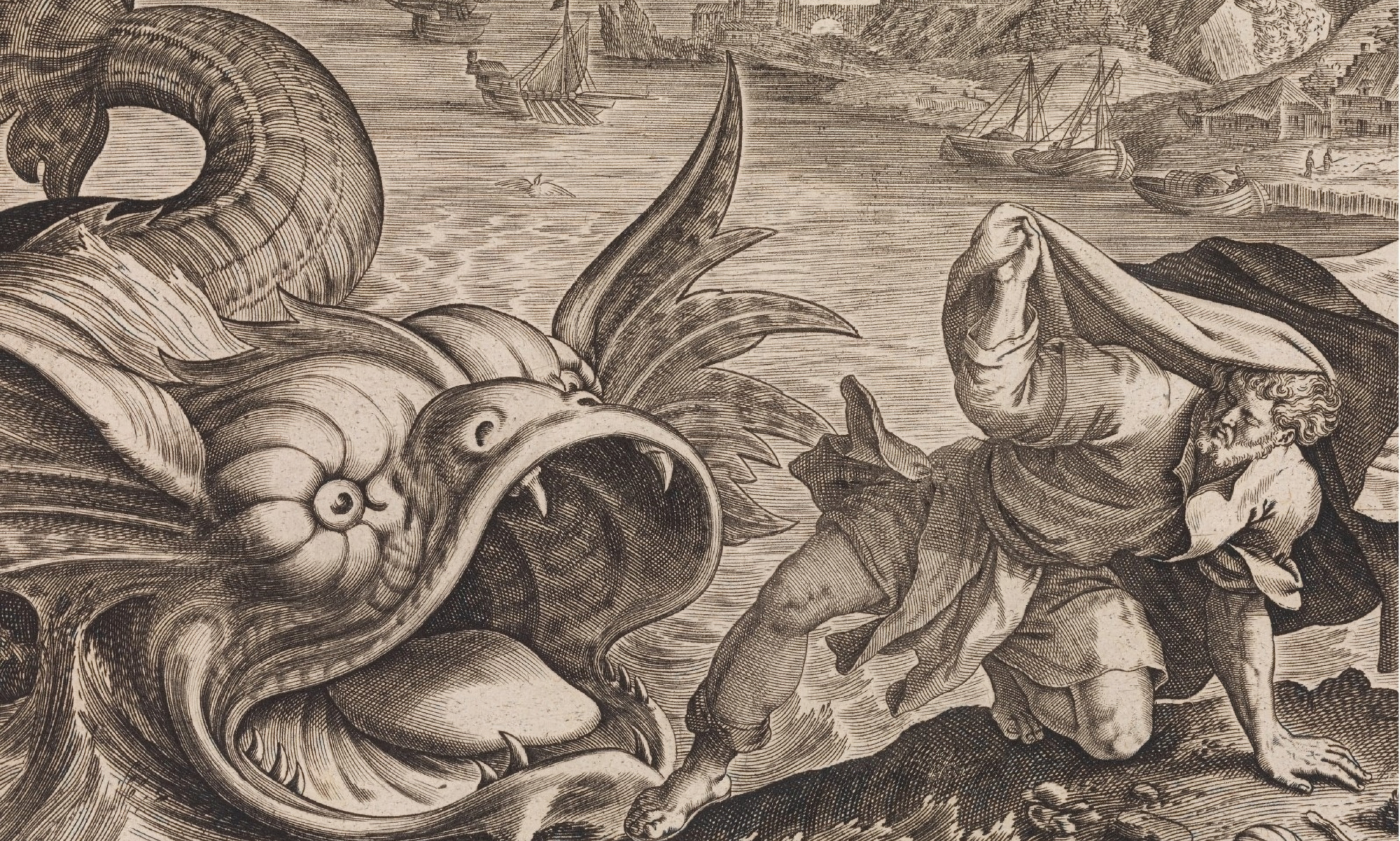
In this video Anne Carson performs Antigonick, which is her version of Sophocles’ ancient Greek tragedy Antigone.
And so I’m hooked. Rumi (as mediated by Coleman Barks)
Having come across Rumi a few times in references by several writers, I was finally persuaded to give him a go when a woman I met on a recent trip to Chicago recommended him most enthusiastically. And so I began reading him. And so I’m hooked.
But am I really reading Rumi, or am I reading Coleman Barks, in whose translation I am currently encountering him? For Barks does not read Persian and thus can only work from literal, scholarly transcriptions. And he has apparently taken not a few liberties in creating poems that feature, in the words of Franklin Lewis (in Rumi: Past, Present, East and West. The Life, Teachings and Poetry of Jalâl al-Din Rumi), ‘a modern American idiom’ and present Rumi’s originally ‘rhythmic and perhaps even trance-like’ poetry as free verse.
Does this really matter though? Well, yes and no, I suppose. Yes in that, as again Lewis points out, Barks, due to his lack of Persian, sometimes misunderstands the original while also teleporting the poems out of their cultural and Islamic context into a modern ecumenical American one. Yet I do believe Barks is right to claim that Rumi would have wanted his poems to resonate with audiences from a different culture. And in Barks’s translation they do, which is why I’m hooked. Would I have been as interested if I had encountered Rumi in wooden, literal transcriptions? Probably not.
There is one thing that worries me a little though. According to Lewis, Barks has turned this ‘poet of overpowering longing, [who is] trying to grope through his acute and shattering sense of loss’, into a serene dispenser of wisdom. That frenetically searching poet I would have liked to meet, but I’m hooked regardless. And Barks does give us beautiful poetry.
‘On Reading’, by Anne Carson
From one of Anne Carson’s ‘short talks’, called ‘On Reading’, again published in Glass and God:
Some fathers hate to read but love to take the family on trips. Some children hate trips but love to read. Funny how often these find themselves passengers in the same automobile.
Funny indeed!
‘The Glass Essay’, by Anne Carson
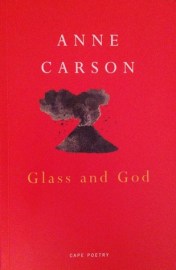 Anne Carson continues to capture (and haunt) my imagination. ‘The Glass Essay’ from her collection Glass and God is a powerful poem, in which a woman reflects on a lost love, the relationship with her mother, her father’s suffering from Altzheimer’s and the writings of Emily Brontë.
Here’s a description of the woman’s pain:
… Woman alone on a hill.
She stands into the wind.It is a hard wind slanting from the north.
Long flaps and shreds of flesh rip off the woman’s body and lift
and blow away on the wind, leavingan exposed column of nerve and blood and muscle
calling mutely through lipless mouth.
These are among my favourite lines:
I reach up and switch on the bedside lamp. Night springs
out the window and is gone over the moor.
Or how about this as a description of the morning light?
Astonished light is washing over the moor from north to east.
.
 Karl Möller