Love deeply

Do not hesitate to love and to love deeply. You might be afraid of the pain that deep love can cause. When those you love deeply reject you, leave you, or die, your heart will be broken. But that should not hold you back from loving deeply. The pain that comes from deep love makes your love ever more fruitful. … Every time you experience the pain of rejection, absence, or death, you are faced with a choice. You can become bitter and decide not to love again, or you can stand straight in your pain and let the soil on which you stand become richer and more able to give life to new seeds.

Henri J. M. Nouwen, The Inner Voice of Love: A Journey through Anguish to Freedom

Best Reads 2013. VI: Rumi, The Book of Love: Poems of Ecstasy and Longing

Rumi, The Book of Love: Poems of Ecstasy and LongingThis book, indeed Rumi generally, has been a revelation to me. As I have said elsewhere, I had come across him several times in the writings of Richard Rohr and others, but it was only when a woman I met at a conference recommended him with the greatest enthusiasm that I ordered my first book of Rumi poems. It happened to be this one.

This collection has been put together and translated by Coleman Barks, who has given us highly readable texts rendered in beautiful English (on Barks as a translator of Rumi’s poetry, see my earlier post And so I’m hooked. Rumi (as mediated by Coleman Barks)’). The book is divided into twenty-two chapters, each of which features an introduction by Barks. There is also an opening introduction and a brief account of the life of Jelaluddin Rumi (1207–73).

Rumi’s poems are an expression of medieval Sufist spirituality, albeit as mediated and adapted by Barks, and so it should come as no surprise that some of it feels foreign to novices like myself. It is foreign, after all! That said though, some passages have touched me in ways I have perhaps never been touched before.

How can I possibly describe its impact on me? I would have to talk about its sheer, breathtaking beauty; its role in expanding my thought, stirring my passion, offering consolation; above all perhaps, its deep and utterly compelling wisdom. But let me give you some further examples, in addition to the ones I have already provided in earlier posts.

Having gone through a prolonged period of intensely-felt grief, I have found Rumi’s thoughts on grief and pain, longing and healing illuminating, consoling and quite simply to be full of wisdom:

The cure for pain is in the pain.

Hold on to your particular pain.
That too can take you to God.

The grief you cry out from
draws you toward union.

I’ve broken through to longing now,
filled with a grief a have felt before,
but never like this.

There’s a shredding that’s really a healing,
that makes you more alive!

Holding on to my pain, not running away from it, not denying it, resisting the urge to move on has been a source of profound blessing. The cure for pain is indeed in the pain in that it generates that longing that draws us toward union, as Rumi says, that longing that can take us to God. A shredding is not what I had been expecting, but strangely enough it has made me more alive.

Rumi on thinking:

… Leave thinking to the one
who gave intelligence. Stop weaving,

and watch how the pattern improves.

How I wish I had come across that advice some time ago, but even if I had, would I have been able to leave well alone? It is so true though. Our weaving does not do any favours to the pattern.

And on jealousy:

If you could untie your wings
and free your soul of jealousy,

you and everyone around you
would fly up like doves.

How true!

This is a beautiful collection of poems, full of deep wisdom and insight. It is a book that I will be returning to time and again. Who knows, perhaps some of the more mysterious sections will over time divulge their deep secrets to me as well.

A pointer to pure being

Having enjoyed poetry when I went to school, I somehow never followed this up, until fairly recently, inspired by a friend, I took to reading it on a regular basis. Now there is always some poetry on my book pile, and I would not want to be without it anymore. So what difference has it made?

It does, of course, depend on the poet I’m reading, but poetry lifts my spirit, it frees me and opens me up, it provides me with consolation and keeps my desire aflame. And it gives me a voice where, in the past, my pain and grief had been mute.

Most importantly perhaps, poetry, as Coleman Barks notes (in Rumi, Bridge to the Soul: Journeys Into the Music and Silence of the Heart), points me to pure being and persuades me there. What better place to be?

We shall not call you human

Human beings come
from the same source.
We are one family.

If a part of the body hurts,
all parts contract with pain.

If you are not concerned
with another’s suffering,
we shall not call you human.

Saadi, as quoted by Coleman Barks in Rumi, Bridge to the Soul: Journeys Into the Music and Silence of the Heart

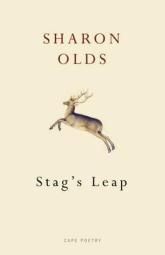
‘When anyone escapes, my heart leaps up’ – Sharon Olds’s Stag’s Leap

Sharon Olds, Stag’s LeapStag’s Leap by Sharon Olds is a book of poetry, written after her husband had left her for another woman. I picked this up the other day because (a) I needed something to read over lunch, (b) the subject matter intrigued me, (c) the blurb had succeeded in deepening my interest, (d) the book has won the T. S. Eliot Prize 2012 and (e) I felt like buying a poetry book (I actually bought two as it happens, but that’s a story for another day). Olds’s book also reminded me of Anne Carson’s The Beauty of the Husband, which similarly won the T. S. Eliot Prize, deals with the loss of a husband, is published by Cape Poetry and which I had enjoyed.

Stag’s Leap then. This is a sequence of poems (though not quite a narrative poem in the sense of Carson’s Autobiography of Red) divided into six parts – January–December, Winter, Spring, Summer, Fall, Years Later – in which Olds reflects on love, the body, sex, loss, betrayal, divorce, pain, grief, anger, hatred ….

There are many poignant moments in these poems, but the earlier reflections in ‘January–December’ and ‘Winter’ moved me the most.

Now I come back to look at love
in a new way, now that I know I’m not
standing in its light. …

I am not here – to stand in his thirty-year
sight, and not in love’s sight,
I feel an invisibility

In the absence of love, Olds reflects, all that remains is ‘courtesy and horror’.

And yet, despite the horror and the pain, there are admirable expressions of tenderness and love even at the moment of separation:

In the last minute of our marriage, I looked into
his eyes. All that day until then, I had been
comforting him, for the shock he was in
at his pain – the act of leaving me
took him back, to his own early
losses. But now it was time to go beyond
comfort, to part. …

Olds finds it possible to think back on how blessed her life had been, partly because she had been able to love and had not lost her husband while he still loved her.

Here is another surprising and rather touching revelation:

… When anyone escapes, my heart
leaps up. Even when it’s I who am escaped from,
I am half on the side of the leaver. …

The poems talk about Olds’s shame at having been left by the one who knew her best. She notes how every hour is a ‘room of shame’ but also how there’s a ‘being of sheer hate’ inside her and how, since it cannot harm him, she can wound him, in her dream.

And she reflects on having lived with an idea, an illusion of her former husband, whom she did not truly see or know.

‘Years later’, she says:

… Maybe I’m half over who he
was, but not who I thought he was, and not
over the wound, sudden deathblow
as if out of nowhere, though it came from the core
of our life together. …

Even so, she can’t let go of him yet but holds him on a string, watching her idea of him pull away yet stay, her ‘silver kite’.

These poems poignantly express the conflicting emotions experienced in the wake of betrayal and loss.
Best Reads 2013. I: Martin Walser, Das dreizehnte Kapitel

Martin Walser, Das dreizehnte KapitelMartin Walser’s latest novel talks about a chance meeting that leads to an intimate correspondence between a male author and a female theologian – and a love that, precisely because of its impossibility, is of the utmost intensity.

It is a poignant book about love, loss and pain. Here are some highlights:

Ich möchte nicht der sein, der ich war. Ich möchte der sein, der ich durch Dich bin.

(I do not want to be the one that I was. I want to be the one that I am through you.)

Streich das Warum.
Heiße den Schmerz willkommen.

(Erase the Why.
Welcome the pain.)

Ohne Unmögliches kann ich nicht leben. Umgeben von nichts als Möglichem erlischt das Leben selbst.

(Without the impossible I cannot live. Surrounded by nothing but the possible, life itself is extinguished.)