Reality is a sound, you have to tune in to it not just keep yelling.
(Anne Carson, Autobiography of Red: A Novel in Verse)
Brilliant!
‘I wonder sometimes if the teacher is not the real student and beneficiary’ (George Steiner)
Reality is a sound, you have to tune in to it not just keep yelling.
(Anne Carson, Autobiography of Red: A Novel in Verse)
Brilliant!
Autobiography of Red: A Novel in Verse – Anne Carson’s masterpiece. Having just read the sequel Red Doc>, I simply had to revisit what has become one of my favourite books of all time. And so I am currently reading this narrative poem, which I only discovered about a year ago, for the fourth time. There is no other book, in which I can lose myself in quite the same way.
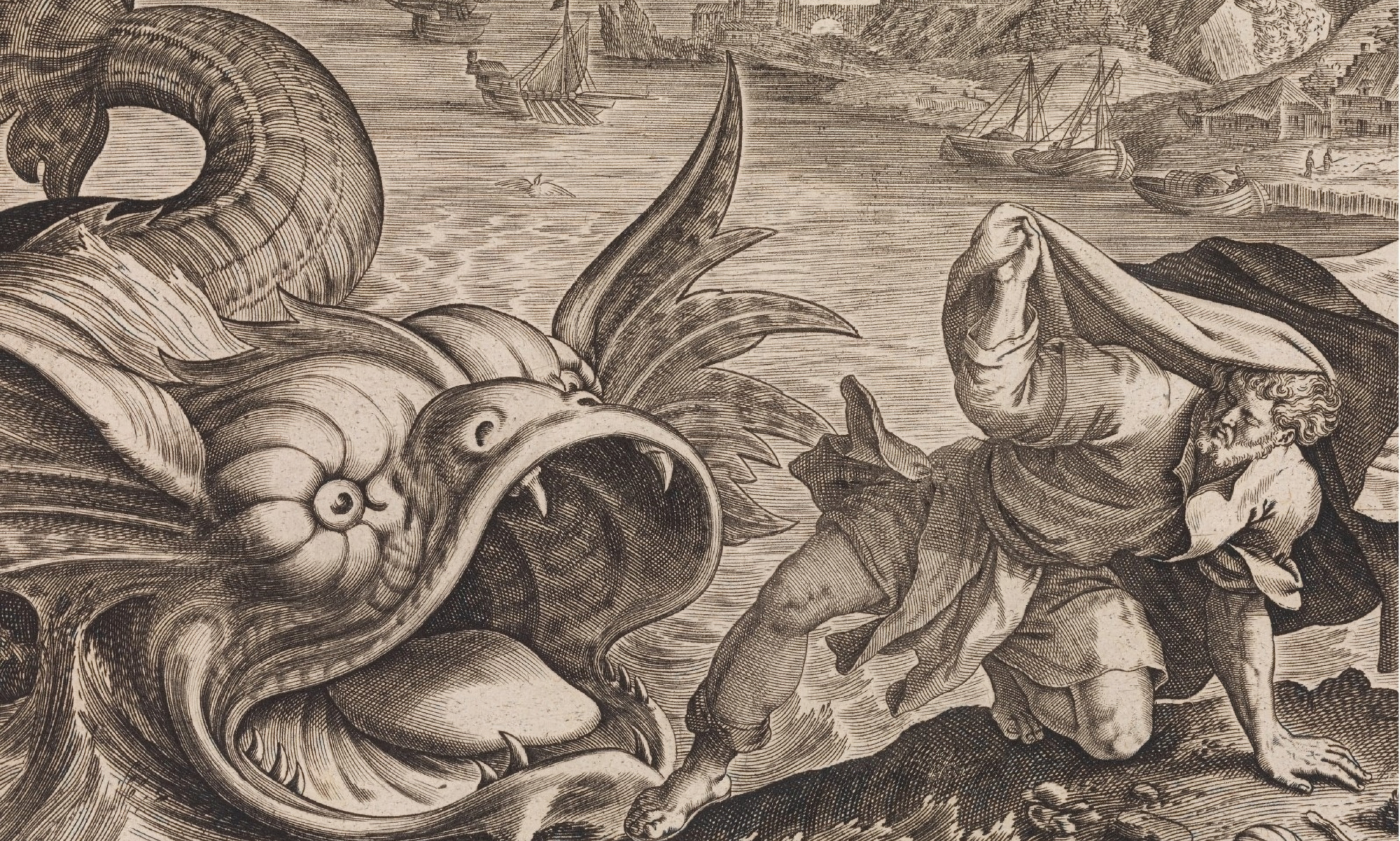
The story is based on some fragments by the Greek writer Stesichoros, whose work in turn reinterprets an episode of the story of Heracles (Hercules), one of whose labours involved killing a dragon in order to get its magic cattle. Stesichoros retells the story from the perspective of the dragon/monster, whom he calls Geryon. Carson adopts the same perspective but gives it another twist by turning Herakles (as a classicist, she adopts the ‘proper’ spelling) into Geryon’s lover.
Carson’s story begins with the childhood of Geryon, the red dragon (hence Autobiography of Red). Sexually abused and bullied by his older brother, he retreats into himself:
Inside is mine, he thought.
…
That was also the day
he began his autobiography. In this work Geryon set down all inside things
particularly his own heroism
and early death much to the despair of the community. He coolly omitted
all outside things.
Carson is a perceptive observer and an unrivalled communicator: the retreat, the self-pity – it’s all here and all so well expressed.
Because of the problems with his brother, Geryon is quite fixated upon his mother. So when, one evening, his mother goes out, leaving him alone with his brother and the babysitter:
Geryon felt the walls of the kitchen contract as most of the air in the room
swirled after her.
He could not breathe. He knew he must not cry. And he knew the sound
of the door closing
had to be kept out of him. Geryon turned all attention to his inside world.
Then he is told that his mother won’t be back for hours.
At this news Geryon felt everything in the room hurl itself
away from him
towards the rims of the world.
In another scene Geryon and his mother enjoy spending some time on their own:
She winked at him over the telephone. He winked back using both eyes
and returned to work.
He had ripped up some pieces of crispy paper he found in her purse to use for hair
and was gluing these to the top of the tomato.
The tomato sculpture, by the way, is Geryon’s autobiography, as he hasn’t learned how to write yet.
His mother is on the phone while Geryon is working on his sculpture. This is how the scene ends:
Maybe next time you could
use a one-dollar bill instead of a ten for the hair, she said as they began to eat.
Soon after: enter Herakles – but that will have to wait for now.
A truly delightful story this …
Anne Carson is brilliant. I have only admiration for her creativity and use of language.
In ‘Red Meat: What Difference Did Stesichoros Make?’ (published in Autobiography of Red), she discusses Stesichoros’s literary contribution, which, in her estimate, consists in breaking the constraints of Homeric epic. ‘Homer’s epithets’, Carson says, ‘are a fixed diction with which Homer fastens every substance in the world to its aptest attribute and holds them in place for epic consumption.’
How does Homer do that? By using a stock repertoire of adjectives, ‘the latches of being’. If nouns name the world and verbs activate those names, then, says Carson, adjectives ‘are the latches of being’. Wow! What an ingenious way of describing the function of adjectives!
So how does Stesichoros come into this? By leaving Homer’s stock repertoire behind and coming up with novel descriptions. Or, in Carson’s words, by ‘undoing the latches’.
His strange red cattle excited envy Herakles came and
Killed him for his cattleThe dog too
‘Red Meat: Fragments of Stesichoros’, in Anne Carson, Autobiography of Red
Words, if you let them, will do what they want to do and what they have to do.
Anne Carson, ‘Red Meat: What Difference Did Stesichoros Make?’ in Autobiography of Red
.

 nne Carson. Red Doc>. The sequel to Autobiography of Red. It doesn’t often happen that I preorder books that have not yet been published. This one I ordered as soon as I knew it was coming out. Autobiography of Red, which I must reread soon, had been a reading experience like no other, and so I had been looking forward to Red Doc>. I half expected to be disappointed though, for how could anything measure up to Autobiography?
So has Red Doc> left me disappointed? No, I’m glad to say that it hasn’t. Is it as good as Autobiography of Red? Perhaps not quite, although it doesn’t fall far short for me. It is a very good book and, like Autobiography, is one of Carson’s most accessible works.
As is so often the case with her books, the layout is once again distinctive.


Being a sequel, Red Doc> picks up the story of Geryon and Herakles years later, but the two protagonists have now acquired new names, Geryon being called G, while Herakles is known as Sad. As for the plot, well, you will have to read the book for yourselves, as I am not going to give anything away.
Readers of Carson’s work won’t be surprised to hear that there are some very poignant moments. For instance, when G meets his old lover, we read:
LOVE’S LONG LOST
shock the boy the man he
knows him. Knew. The
lion head the sloping run a
lavishness in him made you
want to throw your soul
through every door.
I adore Carson’s turn of phrase, which so often is utterly unique and unexpected. This allows her to offer some distinctly new perspectives on life’s most significant moments. In this example, meeting a long lost lover makes ‘you want to throw your soul through every door’. Isn’t that brilliant?
Carson also captures the shock and the breathless response to the surprise encounter so well: ‘the boy the man he knows him’.
Another great moment is G’s conversation with the shrink about his treatment of Sad:
what do you do / talk /
does that help him / one
test for this question /
what test / did he cap
himself yesterday /no / did he cap himself
today / no / so talk helps /
see your point
Red Doc> features many well-taken observations, such as the following one about misnomers, which includes a wonderful description of anciently swaying pines:
Much is misnomer in our
present way of grasping the
world. But pines do
always seem queenly as
they sway so grand and
anciently from the sky to
the ground.
But to me Carson is at her very best when she talks about pain, loss and grief.
G lays his head on the
table it sinks into the table.
To feel anything
deranges you. To be seen
feeling anything strips you
naked.
…
You think what
will they do what new
power will they acquire if
they see me naked like
this. If they see you
feeling.
…
To be seen is the penalty.
Impairment and he lie
down on the floor.
Tears pour in Ida’s
heart but not her eyes …
And the
reason he cannot bear her
dying is not the loss of her
(which is the future) but
that dying puts the two of
them (now) into this
nakedness together that is
unforgivable.
Pain
catches the whole insides
of him and wrings it.
Tears pouring into your heart but not your eyes – what a wonderfully eloquent way of describing pain.
And then there are so many delightful phrases, as when Carson talks about ‘tearstained laughter’, ‘surprised front steps’, a room that ‘looks lonely’, ‘a smile that dazzles the car’ and a voice that is ‘thin enough to see through’, to mention only a few.
Even rather banal moments are evoked in language that delights by its brilliance:
He sits
up suddenly drenched in
ringing. Phone.
This is a book to savour and come back to time and again. I know I will.
 Karl Möller