In order for art to get beyond or behind [repressive] conventions of representation, in order to expose the ideology these conceptions serve, artworks should employ ‘dis-identificatory practices’ that disrupt ‘the dance of ideology,’ and ‘distanciation’ that would ‘liberate the viewer from the state of being captured by illusions of art which encourage passive identification with fictional worlds’.
Mira Schor, ‘Medusa Redux’, quoting Griselda Pollock, Vision and Difference
I was struck by these thoughts on perception and the enlargement of the spirit, which I came across in an article in the journal Arts: The Arts in Religious and Theological Studies (vol. 28, no. 1).
The world about us would be desolate except for the world within us.
Thus says Wallace Stevens in his article ‘Relations between Poetry and Painting’. He goes on to challenge us to embrace
the extension of the mind beyond the range of the mind, the projection of reality beyond reality, … the determination not to be confined, the recapture of excitement and intensity of interest, the enlargement of the spirit at every time, in every way.
Paul Klee, in ‘Creative Credo’, reminds us that:
art does not reproduce the visible; rather, it makes visible.
And Robert Frost, ‘Education by Poetry: A Meditative Monologue’, insists that,
unless you have had your proper poetical education in the metaphor, you are not safe anywhere. Because you are not at ease with figurative values.
God is the most passionate presence in the universe. … there is not a stitch of utilitarianism or functionalism in God. … God surges and flows and is wild.
This aspect of God’s vitality has been lost for so long within the tradition. … Aristotle’s idea of God as unmoved mover seemed to protect the transcendence of God by putting him safely beyond all change.
The danger of such a concept is that it deadens the deity. God is not a dead answer. God is the greatest question in the universe, a question that has kept itself free of banal answers. This is where all fundamentalists and sects get lost. They convert the passion, wildness and danger of God as a question into a clichéd answer ….
John O’Donohue, ‘Fire: At Home at the Hearth of Spirit’, in: The Four Elements: Reflections on Nature
Fire is often used to portray anger. Anger burns and blazes. It inflames the human heart. But it can also be a subtle presence. It can turn totally inward and become depression. It can also hide under several guises. However, unlike resentment, which points to death, anger points to life. For oppressed people, or for oppressed dimensions within the individual life, the awakening and release of anger can be powerfully liberating. Anger is powerful because it has an immediacy, innocence and action in it. The reason that so much evil and corruption are allowed to destroy so many lives is that people’s anger is cleverly managed and quelled into indifference and powerlessness. One of the first targets of prophecy is to locate and kindle this forgotten and neglected anger. Part of the wisdom of living a creative and healing life is to learn the art of using this inner fire well.
John O’Donohue, ‘Fire: At Home at the Hearth of Spirit’, in: The Four Elements: Reflections on Nature
Here’s my final post offering thoughts from Krista Tippett’s book Becoming Wise.
I was struck by this wise statement on community by Dietrich Bonhoeffer, which she quotes:
The person who’s in love with their vision of community will destroy community. But the person who loves the people around them will create community wherever they go.
Brené Brown
Brené Brown, one of Tippett’s interviewees, studies vulnerability, courage, authenticity, and shame – and has this to say about courage and vulnerability:
I cannot find a single example of courage, moral courage, spiritual courage, leadership courage, relational courage, I cannot find a single example of courage that was not born completely of vulnerability. We buy into some mythology about vulnerability being weakness and being gullibility and being frailty because it gives us permission not to do it.
Even more powerfully, she makes the point that:
the most beautiful things I look back on in my life are coming out from underneath things I didn’t know I could get out from underneath.
Two quotes from the diaries of Angela Anaïs Juana Antolina Rosa Edelmira Nin y Culmell, better known as Anaïs Nin:
It is a sign of great inner insecurity to be hostile to the unfamiliar, unwilling to explore the unfamiliar.
When we totally accept a pattern not made by us, not truly our own, we wither and die. People’s conventional structure is often a façade. Under the most rigid conventionality there is often an individual, a human being with original thoughts or inventive fantasy, which he does not dare expose for fear of ridicule, and this is what the writer and artist are willing to do for us. They are guides and map makers to greater sincerity. They are useful, in fact indispensable, to the community. They keep before our eyes the variations which make human beings so interesting.
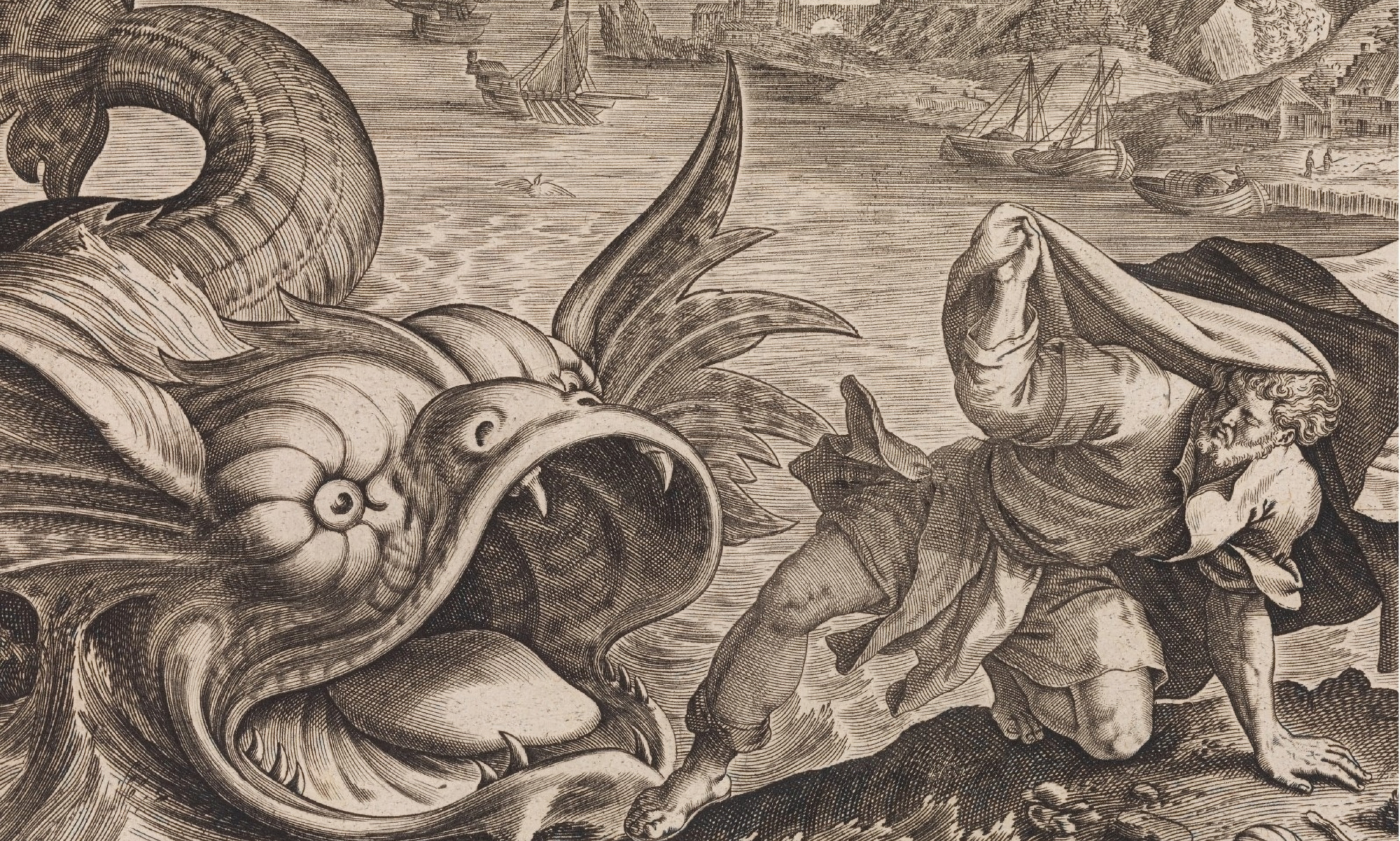
In order for art to get beyond or behind [repressive] conventions of representation, in order to expose the ideology these conceptions serve, artworks should employ ‘dis-identificatory practices’ that disrupt ‘the dance of ideology,’ and ‘distanciation’ that would ‘liberate the viewer from the state of being captured by illusions of art which encourage passive identification with fictional worlds’.


 Karl Möller