Ian McEwan’s latest novel ‘Lessons’

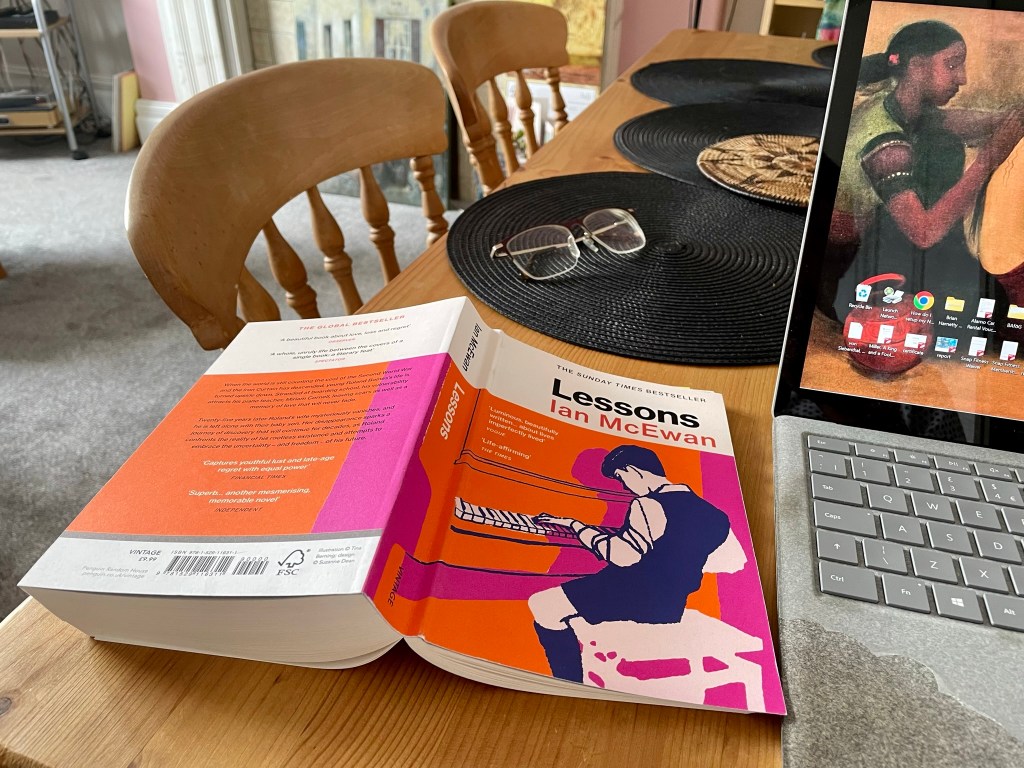
I’ve only read about 20% of Ian McEwan’s latest novel, but this promises to be another masterpiece. Among other things, it deals with the White Rose resistance group in Nazi Germany. In times when politicians once again widely abuse language to manipulate their electorate, it feels almost therapeutic to read about those brave, young intellectuals opposing Hitler in no uncertain terms. It’s a particular delight to read about all this in McEwan’s brilliant prose.

To show the bastards – sorry, because an angel dictated to me

To satisfy my desire for revenge. … To produce order out of chaos. … To defend the human spirit, and human integrity and honor. … To make money so my children could have shoes. To make money so I could sneer at those who formerly sneered at me. To show the bastards. … To thwart my parents. … Compulsive logorrhea. … Because an angel dictated to me. … To act out antisocial behavior for which I would have been punished in real life. … To subvert the Establishment. … To celebrate life in all its complexity.

Magaret Atwood, Negotiating with the Dead: A Writer on Writing

Some reasons given for why writers write. Atwood’s list is much longer, but these are my favourites.

To All the Men Who Use ‘Why are You Single’ as a Chat-Up Line

They ask me why I’m single.
I shy away from the truth.
Spiritual women attract broken men,
and like a nurse I tend to them.
It’s not that I’ve never had relationships.
It’s just there’s a thin line between lover and healer;
I am often both and he is often neither.

He is the one in need,
and I mostly have the ability
to rejuvenate when I deplete.

They come to me wounded,
and it would seem my womb
has a thing for making my heart their remedy.
Them idling on sacred ground,
somebody else’s sacred house.
I act placid as they set God’s house alight to keep them warm.
When they’re done I put out their flames with acid,
scooping up the flesh that’s left behind,
knowing these scars will heal with time.
Because who does not want a woman
who can heal like alchemy,
who can ease pain and sorrow,
mixing elixirs out of her tears, cloves and aloes?
Who does not want a woman who will give all of herself
until she is hollow, God’s home is hollow?
I am shallow, yet drowning still.
It’s best I’m single; that’s God’s will.
Pen has lifted feather and quill.
We are remodelling,
house into a home,
so the next man who enters
will have to take off his shoes and bow to God’s throne.

Muneera Pilgrim, That Day She’ll Proclaim Her Chronicles

Wie haben sie das geschafft?

Wie haben sie das geschafft: sich zu behaupten, für sich zu sorgen, für sich zu kämpfen, ohne ein Schwein zu werden, dem die anderen egal sind?

Bernhard Schlink, Die Enkelin

Translation: ‘How did they manage to assert themselves, to take care of themselves, to fight for themselves, without becoming a pig who doesn’t care about the others?’

Having just witnessed yet another grave abuse of power by a figure in authority who should have known better than to act in the way they did, i.e., without any apparent care for those they were hurting, Schlink’s question is a pertinent one for me.

It is when noting the traces of little tokens of the deep humanity among the inmates of Ravensbrück concentration camp that the protagonist of Schlink’s novel asks how they managed not to lose their humanity even in an extreme situation like that.

It is our ongoing challenge that – whatever the hurt, whatever the abuse – we manage to assert ourselves, take care of ourselves, fight for ourselves, without losing our own humanity in the process.
Power, originality, independence – and ostracisation

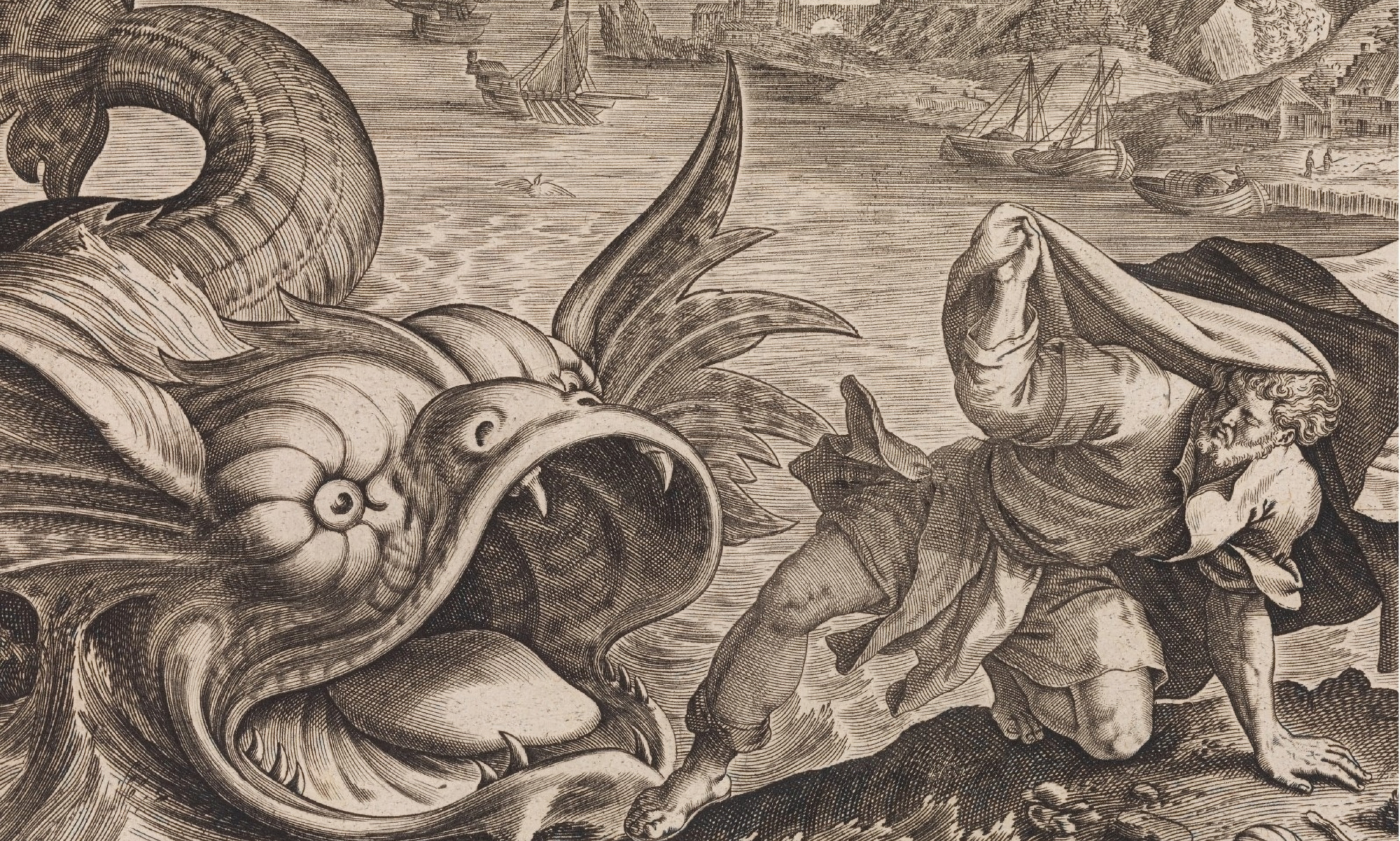
Many a contemporary man … gives up his power, originality, and independence, because of fearing exile if he does not. He renounces his power and conforms under the great threat and peril of ostracism.

Rollo May, Existential Psychotherapy

Unless, of course, one doesn’t – only to find oneself duly ostracised. The wisdom of May’s statement should not be missed despite its gendered language – a product of the time.