I thought I would add some reflections on yesterday’s quotes from John O’Donohue’s poems.
As air intensifies the hunger of fire,
May the thought of death
Breathe new urgency
Into our love of life.
Death can be all pervasive at times, occurring in a variety of ways and reducing us to a shadow of our true selves, lessening, diminishing, stifling life. Against all this, O’Donohue sets his evocation of our love of life, and he’s right, I think, about the urgency of this. Death is inevitable, but we need to be careful not to think and live ourselves into an ever darker place.
O’Donohue’s second poem talks about a surrendered life, a continuous belief ‘in the slow fall of ground’, an elegant swirling through all the unlikenesses we face on our pilgrimage. These are powerful metaphors. May we learn to be like that river he talks about. And may we acquire not only the humility of water, allowing ourselves to be shaped by things beyond our control, but also its buoyancy, which, as he puts it so well, is ‘stronger than the deadening, downward drag of gravity’.
In the third poem, ‘In Praise of Earth’, O’Donohue speaks of ‘an endless coma of cold’, which is a truly chilling metaphor. Life can feel like that at times, when all warmth appears to have evaporated. May we be like the earth, holding hope, storing fragments of the memory of warmer times, and may we see and feel the sun returning one day. May our cells, too, as O’Donohue says in the following lines, become ‘charged with dream’.
For me, these are deeply resonant, life-giving words. As the Gospel of John says, in the beginning was the Word. Where words dry out, life surrenders to death.
Another book that I find truly inspiring and refreshing is John O’Donohue’s The Four Elements. Here are some extracts from three of his poems quoted by his brother Pat in the foreword.
From ‘In Praise of Fire’
…
As air intensifies the hunger of fire,
May the thought of death
Breathe new urgency
Into our love of life.
…
As short as the time
From spark to flame,
So brief may the distance be
Between heart and being.
May we discover
Beneath our fear
Embers of anger
To kindle justice.
…
From ‘In Praise of Water’
…
The courage of a river to continue belief
In the slow fall of ground,
Always falling further
Towards the unseen ocean.
…
Its only life surrendered
To the event of pilgrimage
…
It continues to swirl
Through all unlikeness,
With elegance
…
Let us bless the humility of water,
Always willing to take the shape
Of whatever otherness holds it.
The buoyancy of water,
Stronger than the deadening,
Downward drag of gravity
…
From ‘In Praise of Earth’
…
When the ages of ice came
And sealed the earth inside
An endless coma of cold,
The heart of the earth held hope,
Storing fragments of memory,
Ready for the return of the sun.
…
Until its black infinity of cells
Becomes charged with dream,
Then the silent, slow nurture
Of the seed’s self, coaxing it
To trust the act of death.
…
Let us ask forgiveness of the earth
For all our sins against her:
For our violence and poisonings
Of her beauty.
Here are some passages from Krista Tippett’s book Becoming Wise: An Inquiry into the Mystery and Art of Living, passages that struck, inspired, challenged me.
In connection with the Irish poet and philosopher John O’Donohue, she mentions his belief in ‘the possibility of creating our own inner landscapes of beauty, to keep us vital in the midst of bleak and dangerous surroundings and experiences’, a need that, as many of us know only too well, may arise at any time.
Talking about the work of philosopher and L’Arche founder Jean Vanier, she quotes his vitally important vision ‘to educate people to relate, to listen, to help people to become themselves’ rather than, as is so often the case, to subject them to a preconceived agenda, whatever that may be.
And she quotes john a. powell, Professor of Law and Professor of African American Studies and Ethnic Studies, who notes that:
people are looking for community, right now, though we don’t have confidence in love. We have much more confidence in anger and hate. We believe anger is powerful. We believe hate is powerful. And we believe love is wimpy. And so if we’re engaged in the world, we believe it’s much better to sort of organize around anger and hate.
Lovers, by contrast, as Tippett herself points out are artists who are ‘reaching out to enemies, embracing complexity, creativity, and risk’.
Lastly, here are some words from geophysicist Xavier Le Pichon, also taken from Tippett’s book, words whose truth I have come to know in my own experience:
once you enter into this way of, I would call it companionship, walking with the suffering person who has come into your life and whom you have not rejected, your heart progressively gets educated by them. They teach you a new way of being.
We have to be educated by the other. My heart cannot be educated by myself. It can only come out of a relationship with others. And if we accept being educated by others, to let them explain to us what happens to them, and to let yourself be immersed in their world so that they can get into our world, then you begin to share something very deep.
Having re-read Margaret Atwood’s book of ‘fictional essays’ The Tent, I was particularly struck by the eponymous essay ‘The Tent’, which I have reproduced below. Even though it was published over ten years ago, it seemed particularly fitting during these early days of the presidency of Donald Trump.
The Tent
You’re in a tent. It’s vast and cold outside, very vast, very cold. It’s a howling wilderness. There are rocks in it, and ice and sand, and deep boggy pits you could sink into without a trace. There are ruins as well, many ruins; in and around the ruins there are broken musical instruments, old bathtubs, bones of extinct land mammals, shoes minus their feet, auto parts. There are thorny shrubs, gnarled trees, high winds. But you have a small candle in your tent. You can keep warm.
Many things are howling out there, in the howling wilderness. Many people are howling. Some howl in grief because those they love have died or been killed, others howl in triumph because they have caused the loved ones of their enemies to die or be killed. Some howl to summon help, some howl for revenge, others howl for blood. The noise is deafening.
It’s also frightening. Some of the howling is coming close to you, in your tent, where you crouch in silence, hoping you won’t be seen. You’re frightened for yourself, but especially for those you love. You want to protect them. You want to gather them inside your tent, for protection.
Margaret Atwood, The Tent
The trouble is, your tent is made of paper. Paper won’t keep anything out. You know you must write on the walls, on the paper walls, on the inside of your tent. You must write upside down and backwards, you must cover every available space on the paper with writing. Some of the writing has to describe the howling that’s going on outside, night and day, among the sand dunes and the ice chunks and the ruins and bones and so forth; it must tell the truth about the howling, but this is difficult to do because you can’t see through the paper walls and so you can’t be exact about the truth, and you don’t want to go out there, out into the wilderness, to see exactly for yourself. Some of the writing has to be about your loved ones and the need you feel to protect them, and this is difficult as well because not all of them can hear the howling in the same way you do, some of them think it sounds like a picnic out there in the wilderness, like a big band, like a hot beach party, they resent being cooped up in such a cramped space with you and your small candle and your fearfulness and your annoying obsession with calligraphy, an obsession that makes no sense to them, and they keep trying to scramble out under the walls of the tent.
This doesn’t stop you from your writing. You write as if your life depended on it, your life and theirs. You inscribe in shorthand their natures, their features, their habits, their histories; you change the names, of course, because you don’t want to create evidence, you don’t want to attract the wrong sort of attention to these loved ones of yours, some of whom – you’re now discovering – are not people at all, but cities and landscapes, towns and lakes and clothing you used to wear and neighbourhood cafés and long-lost dogs. You don’t want to attract the howlers, but they’re attracted anyway, as if by a scent: the walls of the paper tent are so thin that they can see the light of your candle, they can see your outline, and naturally they’re curious because you might be prey, you might be something they can kill and then howl over in celebration and then eat, one way or another. You’re too conspicuous, you’ve made yourself conspicuous, you’ve given yourself away. They’re coming closer, gathering together; they’re taking time off from their howling to peer, to sniff around.
Why do you think this writing of yours, this graphomania in a flimsy cave, this scribbling back and forth and up and down over the walls of what is beginning to seem like a prison, is capable of protecting anyone at all? Yourself included. It’s an illusion, the belief that your doodling is a kind of armour, a kind of charm, because no one knows better than you do how fragile your tent really is. Already there’s a clomping of leather-covered feet, there’s a scratching, there’s a scrabbling, there’s a sound of rasping breath. Wind comes in, your candle tips over and flares up, and a loose tent-flap catches fire, and through the widening black-edged gap you can see the eyes of the howlers, red and shining in the light from your burning paper shelter, but you keep on writing anyway because what else can you do?
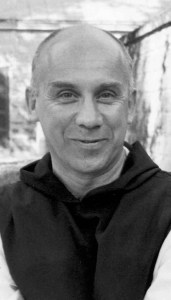
Writing sometime in the 1950s or 60s (hence the non-gender-inclusive language), Thomas Merton had this to say about democracy:
… democracy assumes that the citizen knows what is going on, understands the difficulties of the situation, and has worked out for himself an answer that can help him to contribute, intelligently and constructively, to the common work (or ‘liturgy’) of running his society.
[…] Democracy cannot exist when men prefer ideas and opinions that are fabricated for them.
Indeed, he worried that, if the above is not realised, ‘democracy ceases to be an objective fact and becomes nothing but an emotionally loaded word’.
These thoughts by Merton, published in Conjectures of a Guilty Bystander, illustrate why it is profoundly problematic to assert that democracy has been served in the recent referendum leading to a narrow majority in favour of Brexit.
When politicians and a certain sector of the media do everything they possibly can to spread fabricated ideas, thus making it extremely difficult for citizens to know what is going on or to understand the difficulties of the situation, then democracy has NOT been served; indeed, as Merton rightly saw, it ‘ceases to be objective fact and becomes nothing but an emotionally loaded word’, which is exactly what we are witnessing at present.
For a society to move forward in healthy and life-giving ways, it is essential that this is acknowledged and that properly democratic steps are now taken as it seeks to negotiate its future.
Perhaps it is only a monk who can think of this in terms of ‘liturgy’, alluding to the original meaning of the term, but a coming together, a common work, is precisely what we now need.
Some thoughts from André Gorz’s book Letter to D: A Love Story.
On love and life together:
I understood that pleasure is not something you give or take. It’s a way of giving yourself and calling forth the gift of self from the other person.
What captivated me about you was that you opened the door to another world for me.
You gave all of yourself to help me become myself.
You opened up the richness of life for me and I loved life through you – unless it was the reverse and I loved you through all living things (but that comes down to the same thing).
It’s fairly safe to say I probably haven’t lived up to the resolution I made 30 years ago: to live completely at one with the present, mindful above all of the wealth of our shared life.
On finitude:
You have to accept being finite: being here and nowhere else, doing this and not something else, now and not always or never … having only this life.
On writing:
… you knew that a person who wanted to be a writer needs to be able to shut themselves away in seclusion, to make notes at any hour of the day or night; that their work with language goes on well after they’ve laid down their pen and can take complete possession of them without warning, in the middle of a meal or a conversation.
‘When everything’s said, everything remains to be said, everything always remains to be said’. In other words: it’s the saying that matters, not the said. What I’d written interested me a lot less than what I might write next.
On theory:
… theory always runs the risk of blinding us to the shifting complexities of the real world.
 In connection with the Irish poet and philosopher John O’Donohue, she mentions his belief in ‘the possibility of creating our own inner landscapes of beauty, to keep us vital in the midst of bleak and dangerous surroundings and experiences’, a need that, as many of us know only too well, may arise at any time.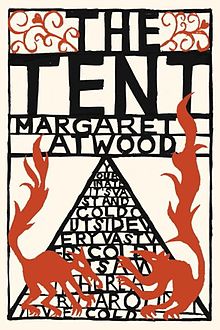
 Writing sometime in the 1950s or 60s (hence the non-gender-inclusive language), Thomas Merton had this to say about democracy:
 Some thoughts from André Gorz’s book Letter to D: A Love Story.
 Karl Möller