Playing the lyre

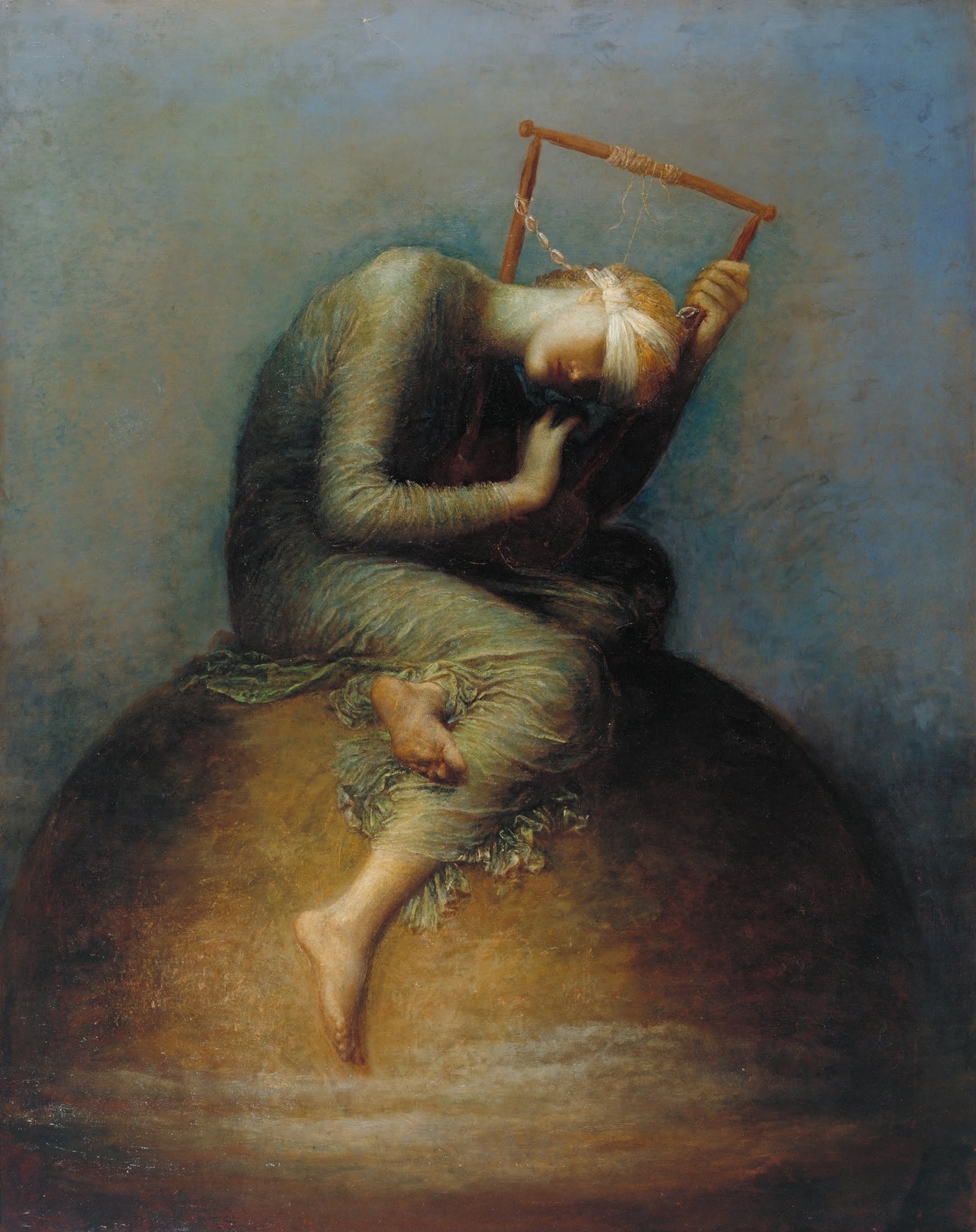
In one of his sermons in Strength to Love, Martin Luther King mentions George Frederic Watts’s painting ‘Hope’, which depicts a blindfolded woman astride a globe, plucking at her lyre’s remaining single string. G. K. Chesterton once commented that the first thought on anyone seeing it is that it should be called ‘Despair’, but Watts’s painting rather eloquently speaks of hope in despair. With all but one of the strings snapped, the woman, whilst clearly unspeakably sad, continues to play her lyre. She thus evokes an important aspect of the human condition, namely people’s ability, at their lowest point, to sense and feel a single string of hope that keeps them going when all else is failing.

George Frederic Watts, ‘Hope’
George Frederic Watts (1817–1904), ‘Hope’

Martin Luther King on love

Envy, jealousy, a lack of self-confidence, a feeling of insecurity, and a haunting sense of inferiority are all rooted in fear. … Is there a cure for these annoying fears that pervert our personal lives? Yes, a deep and abiding commitment to the way of love. ‘Perfect love casteth out fear.’

… hate divides the personality, and love in an amazing and inexorable way unites it.

We shall match your capacity to inflict suffering by our capacity to endure suffering. We shall meet your physical force with soul force. Do to us what you will, and we shall continue to love you. … But be ye assured that we will wear you down by our capacity to suffer. … Love is the most durable power in the world.

Martin Luther King Jr, Strength to Love

A shaft of light

We have experiences when the light of day vanishes, leaving us in some dark and desolate midnight – moments when our highest hopes are turned into shambles of despair or when we are the victims of some tragic injustice and some terrible exploitation. During such moments our spirits are almost overcome by gloom and despair, and we feel that there is no light anywhere. But ever and again, we look toward the east and discover that there is another light that shines even in the darkness and ‘the spear of frustration’ is transformed ‘into a shaft of light.’

… God has two lights: a light to guide us in the brightness of the day when hopes are fulfilled and circumstances are favorable, and a light to guide us in the darkness of the midnight when we are thwarted and the slumbering giants of gloom and hopelessness rise in our souls.

Faith in the dawn arises from the faith that God is good and just. When one believes this, he knows that the contradictions of life are neither final nor ultimate. He can walk through the dark night with the radiant conviction that all things work together for good for those that love God. Even the most starless midnight may herald the dawn of some great fulfillment.

Martin Luther King Jr, Strength to Love

The heart sings

Typography, another fascination of mine. Although it is one that I have been paying far too little attention to in recent years. I’m not entirely sure why. Perhaps I have been too preoccupied with work. Beauty is important though because it lifts the spirit. It really ought not to be neglected. Having begun to realise that I have been quite wrong to do so, I am all the more determined to make time for the contemplation and pursuit of beauty.

One thing that I truly delight in is beautiful lettering and typography, and so I was very excited when I discovered Jessica Hische’s beautiful site Daily Drop Cap, which features a plethora of illustrative initial caps that can be reproduced free of charge on non-commercial sites. I shall make good use of them on ‘Brief thoughts & quotes’ from now on.

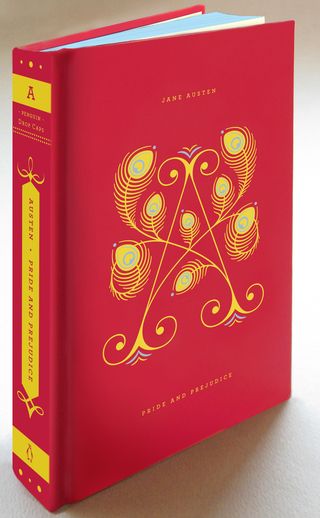
By the way, I came across Jessica’s site on Nonsuch Book, a bibliophile blog that also alerted me to the fact that Jessica has been involved in the design of Penguin’s beautiful Drop Caps series, an example of which is shown below.

Jessica Hische's Design of Jane Austin's 'Pride and Prejudice'
Jessica Hische’s design of Jane Austin’s ‘Pride and Prejudice’

What can I say? The heart sings when it sees a book like this!

Of love, compassion and the unexpected angel of mercy

Without passion there’s no compassion. In the same way there has to be eros in the mixture if there is to be agape as well.

Thus open this morning’s ‘Lent Daily Reflections’ by the World Community for Christian Meditation. Both those sentences ring entirely true to me. It is through suffering that we learn to be compassionate; and true love is always marked by agape and eros.

The reflections then refer to Luke 22:41-44:

[Jesus] withdrew from them about a stone’s throw, knelt down, and prayed. He said, ‘Father, if it’s your will, take this cup of suffering away from me. However, not my will but your will must be done.’ Then a heavenly angel appeared to him and strengthened him. He was in anguish and prayed even more earnestly. His sweat became like drops of blood falling on the ground.

I have quoted this passage from the fairly new Common English Bible. Anyway, the reflections conclude:

This is no fairy tale. For any mature person it resonates with our own experience. Aloneness, anguish, fear, physical symptoms, the unexpected angel of mercy. But at the heart of it is the love [Jesus] felt holding him, which empowered him to love those he did not even, at that instant, consciously know.

There are two insights in this that resonate deeply with me: that we are empowered to love by being held in/by love ourselves, and that it is particularly in those experiences of intense suffering that we meet the unexpected angel of mercy.
Love life fiercely

Love for beauty; care for the material life that gives pleasure and joy; appreciation for the numinous world, revealed by the Spirit in life; and embrace of the eros that empowers human beings as social creatures to seek others – these are spiritual powers that deliver salvation.

We reenter this world as sacred space when we love life fiercely, and, in the name of love, protect the goodness of our intricate web of life in all its manifold forms. We recommit ourselves to this world as holy ground when we remember the fullness of life that is possible through our communities, our life-affirming rituals, and our love of beauty, of truth, of goodness.

Rita Nakashima Brock, ‘Paradise and Desire: Deconstructing the Eros of Suffering’, in F. LeRon Shults and Jan-Olav Henriksen (eds), Saving Desire: The Seduction of Christian Theology